 BETA
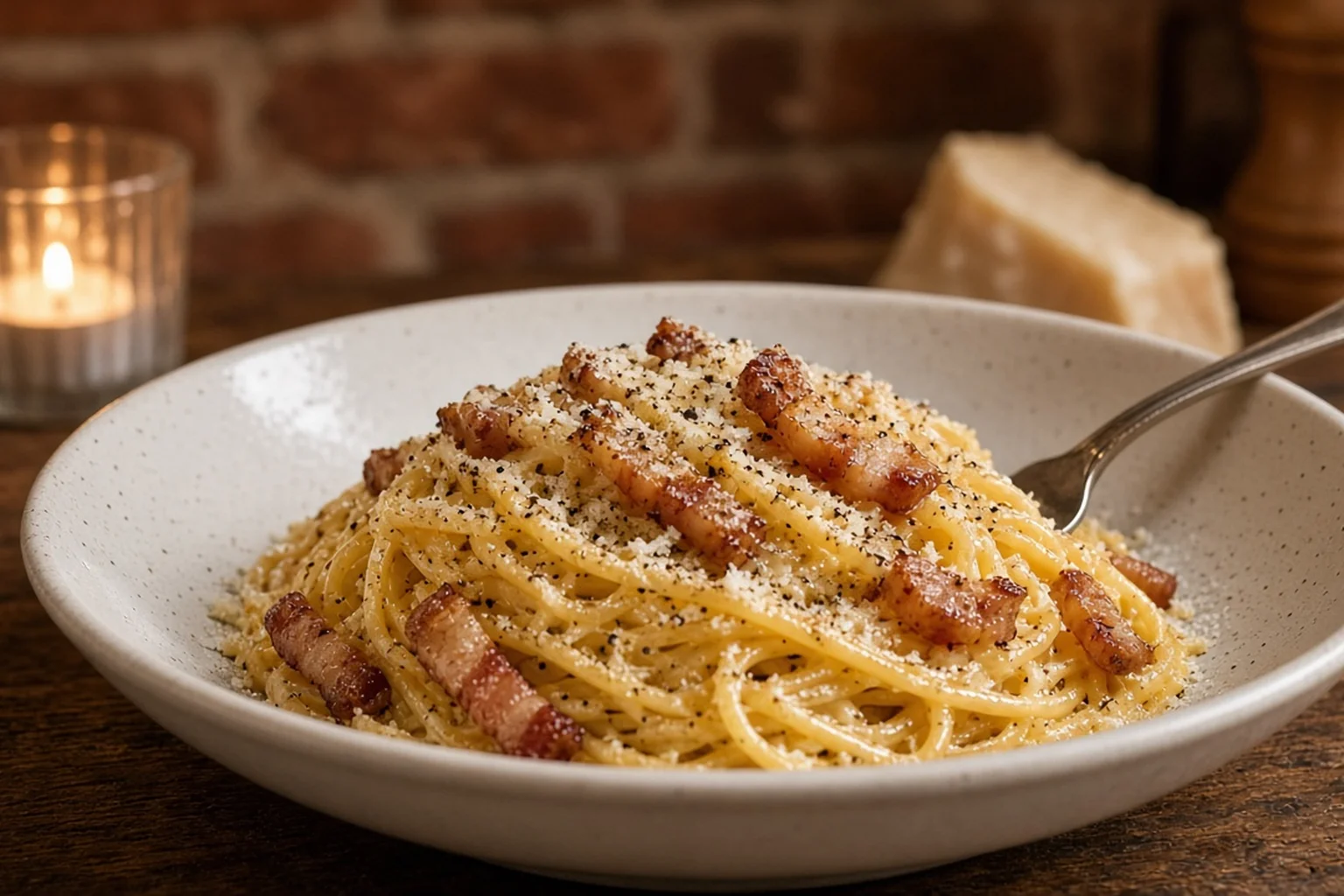
Spaghetti carbonara
Crisp-edged guanciale, plenty of black pepper and a glossy egg-and-pecorino sauce made with no cream. A Roman classic, tossed off the heat until silky.
25 minutes · Intermediate · 2 servings
Original house recipe · Not yet kitchen-tested
Ingredients
- Spaghetti200 g
- Guanciale (or pancetta)100 g
- Egg yolks3 whole
- Egg1 whole
- Pecorino Romano40 g
- Parmesan20 g
- Black pepper1 tsp
- Salt1 tsp
Quantities describe recipe usage, not package sizes.
Allergen notes
Egg; milk in Pecorino and Parmesan; wheat in spaghetti. Check guanciale or pancetta labels.
Method
Get everything ready
Bring 2 litres of water to a boil in a medium pot. Less water than usual gives you starchier cooking water, which helps the sauce. Take the eggs out of the fridge. Cut the rind off the guanciale, slice it about 5 mm thick, then cut it into 1 cm strips. Finely grate both cheeses, mix them, and set 2 tbsp aside for serving.
Make the egg and cheese cream
Separate 3 yolks and keep the whites for another day. In a large heatproof metal bowl, whisk the yolks, the whole egg, the cheese and 0.75 tsp freshly and coarsely ground pepper into a thick, smooth paste with no dry cheese left.
Render the guanciale slowly
Put the guanciale in a large cold skillet with no oil. Set it over medium-low heat and cook for 8–10 minutes, stirring now and then, until most of the fat has melted and the strips are golden and crisp at the edges but still a little chewy in the middle. Turn off the heat. Leave the pork and all its fat in the pan.
Cook the spaghetti
Add the salt to the boiling water. Cook the spaghetti for 1 minute less than the package time, stirring in the first minute so the strands do not stick. Reserve 1 cup (250 ml) of pasta water, then lift the spaghetti out with tongs. Do not drain the pot; keep it at a simmer for the optional bain-marie finish.
Loosen the cream
Whisk 2 tbsp of the hot cooking water into the egg mixture, then 1 tbsp of the warm guanciale fat, until it looks like a loose, pourable custard. Keep the pot of water at a bare simmer in case you need it later.
Coat the pasta in the pork fat
Add the lifted spaghetti to the skillet with 3 tbsp of cooking water. Toss over medium heat for about 1 minute, until the water is mostly absorbed and the pasta is just al dente and shiny with fat. Take the pan off the heat and let it stand for 30 seconds. The pan should stop sizzling.
Make the sauce off the heat
Tip the spaghetti, guanciale and every bit of fat into the egg bowl. Toss hard with tongs for 1–2 minutes, adding cooking water 1 tbsp at a time, until the sauce is glossy, clings to every strand and flows like heavy cream. If it stays thin, set the bowl over the simmering pot without letting it touch the water, and toss in 15–20 second bursts until it thickens, about 63–65°C (145–150°F). If you see small curds, take the bowl off the heat and toss in another splash of water.
Serve straight away
Divide between warm bowls and finish with the reserved cheese and the remaining 0.25 tsp pepper. The eggs are gently cooked, not fully set; use pasteurized eggs for anyone pregnant, very young, older or immunocompromised. Refrigerate leftovers within two hours.
The bowl never goes over direct heat, which is why the eggs do not scramble. The simmering pot is your safety net if the sauce stays thin. Guanciale and pecorino are both salty, so taste before adding any extra salt.
Explore the The Pasta Room menu
Golden mushrooms, bright tomatoes and silky sauces. Italian-inspired comfort with room for a second helping.
- Creamy mushroom fettuccine · Golden mushrooms, silky cream and a generous finish of Parmesan. A cosy trattoria dinner without the reservation.
- Wild mushroom & truffle pasta · A richer restaurant-style plate with a mix of mushrooms, fresh pasta and a restrained touch of truffle oil.
- House tomato & basil spaghetti · A slow-softened garlic and tomato sauce, fresh basil and Parmesan, tossed with spaghetti until glossy.
Ratings & comments
Loading reviews…